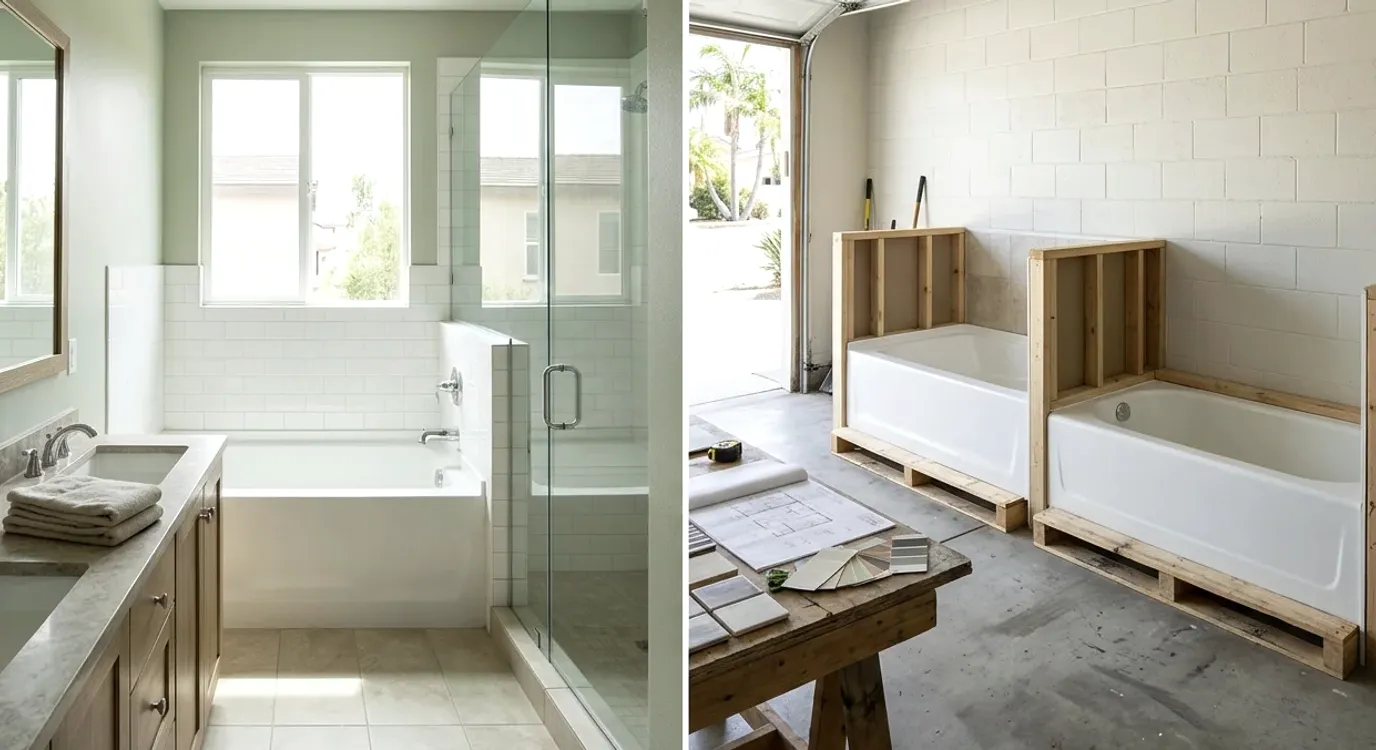
Choosing between acrylic and cast iron affects more than the bathroom’s appearance. The selected tub must fit the room, reach its final location, work with the floor, and connect to the existing plumbing. For a San Diego replacement, compare exact models instead of relying on broad material claims.
How acrylic and cast iron differ in daily use
There isn’t one best bathtub material for every remodel. The better choice is the model that suits your bathing habits, room, access route, and maintenance preferences.
Begin with the manufacturer’s documents for each tub. Compare the interior shape, bathing depth, rim profile, drain location, overflow location, and available accessories. Two tubs with similar outside dimensions can offer different usable spaces. A showroom visit can also help you judge the back angle, arm position, and ease of entering the tub.
Be careful with universal heat-retention claims. Manufacturers and sellers make conflicting statements about acrylic and cast iron. The approved information for this site doesn’t establish a verified heat-retention advantage for either material. If warm-water performance matters, request model-specific test information from each manufacturer. Compare tests conducted under similar conditions.
The same approach applies to sound and surface feel. Ask to see the exact model or a sample from the same product line. Don’t assume every tub made from one material feels identical.
An acrylic bathtub replacement may offer a different selection of shapes than a cast-iron line, but availability changes by manufacturer. Confirm the current catalog before planning the room around a product image.
Your decision should follow this order:
- Confirm that the tub fits the finished opening.
- Confirm that its drain and overflow suit the plumbing plan.
- Review the manufacturer’s installation instructions.
- Check the access route and floor with the installer.
- Read the written cleaning and repair guidance.
That process gives you a defensible comparison. It also prevents a material preference from overriding a poor fit.
Floor support and access before the tub arrives
The product specification sheet should list the tub’s dimensions and product weight. Give that sheet to the licensed remodeler before ordering. The pro can then evaluate the floor, framing, placement, and manufacturer’s support instructions for that exact model.
Don’t accept a blanket statement that every acrylic tub needs no floor review. Don’t assume every cast-iron tub requires the same structural work. The home’s condition, tub location, product design, and installation method all matter.
This review becomes especially important when the bathroom isn’t at ground level. The installer needs to consider both the tub and its intended use. If structural questions remain, the quote should identify who will evaluate them before installation begins.
Access deserves the same early attention. Measure the tub, shipping package, bathroom doorway, halls, turns, stairs, and landing areas. Include removable doors and trim in the discussion, but don’t assume they’ll solve every tight point. The installer should confirm the route.
Permitting depends on the project’s scope. Within the City of San Diego, bathroom remodel permits are handled through Development Services. The available verified information doesn’t establish a checklist of tub-replacement permit triggers or fees. Ask the department about your specific address and scope.
Homes in unincorporated San Diego County use County Planning & Development Services for building permits. Incorporated cities, including Chula Vista, El Cajon, Encinitas, and Oceanside, operate their own building departments. Confirm the correct jurisdiction before work begins.
A bathtub installation and replacement pro can review the product documents, room, and access plan together. That’s more useful than choosing from a catalog first and investigating the house later.
Getting a heavy tub through an existing home
Delivery planning should happen before the purchase becomes difficult to change. Use the manufacturer’s published dimensions and weight for the selected model. Don’t rely on an average found in an unrelated buying guide.
Map the full route from the unloading point to the bathroom. Check exterior steps, gates, entry doors, hall corners, stair turns, railings, ceiling clearances, and the final approach to the tub space. The shipping package may also be larger than the tub itself, so request packaged dimensions from the seller.
The installation quote should state who handles delivery beyond the curb. It should also explain who protects floors, walls, doors, and stairs. If something must be removed for access, the quote should identify who removes it and who restores it.
Don’t guess what the existing tub is made from. Old paperwork, a visible product label, or a model number may answer the question. If those aren’t available, ask the remodeler to inspect accessible parts of the tub and explain the basis for the identification. Appearance alone shouldn’t drive the replacement plan.
The same rule answers “What is an acrylic bathtub?” for a product you’re considering. Read that model’s construction description rather than applying a generic definition. Ask the manufacturer to identify every material used in the tub body, reinforcement, finish, and support system.
Acrylic and fiberglass also shouldn’t be treated as interchangeable labels. A listing may describe several materials or layers. Get the construction details in writing. Then make sure the installation quote names the exact manufacturer and model.
For an occupied San Diego home, route protection matters as much as tub selection. Discuss where the tub will be staged, what surfaces will be covered, and how packaging leaves the property. These details should be decided before delivery day.
Finish care, chips, and repair decisions
Surface care starts with the exact manufacturer’s instructions. Request the current cleaning guide before buying either tub. Save it with the receipt, model number, installation instructions, and any written warranty documents provided by the seller or installer.
Don’t assume one homemade cleaner works on every bathtub. Use only products and tools allowed by the tub manufacturer. If the written guidance conflicts with advice from a blog, store employee, or social post, ask the manufacturer for clarification.
Homeowners often ask whether acrylic tubs turn yellow. The approved sources for this site don’t confirm a universal answer. Product formulation, finish, cleaning products, exposure, and manufacturing can vary. Ask the manufacturer whether discoloration is covered, excluded, or addressed in its care documents for that model.
Damage also needs a model-specific response. If a surface develops a scratch, chip, crack, stain, dull area, or exposed layer, photograph it before attempting a repair. Record when it appeared and what products touched the area. Then contact the manufacturer or the party responsible under the applicable written warranty.
Avoid choosing a repair kit solely because its label names the general material. Confirm compatibility with the tub manufacturer. An unapproved repair can change the appearance or complicate a later professional assessment.
The remodeler’s quote should explain responsibility for damage found during delivery and installation. Ask how damage will be documented before the tub enters the house, after unpacking, and before the surrounding finish work closes access.
Repairability can influence the cast iron or acrylic tub decision, but vague promises aren’t enough. Ask each seller these questions:
- What damage can an authorized repair provider address?
- Which repairs can remain visible afterward?
- Who decides whether replacement is necessary?
- Who pays for removal and reinstallation if a defect is confirmed?
- What written exclusions apply?
Answers may differ by model and seller. Keep them in writing before placing the order.
What the installation quote should separate
A clear quote separates the tub purchase from the work needed to place and connect it. That makes competing proposals easier to compare. It also shows which assumptions could become change orders.
The quote should identify the manufacturer, model, dimensions, finish, drain orientation, and included components. It should say who orders the tub and who checks it for shipping damage. If the homeowner purchases it, the contract should explain what happens when the wrong model arrives.
Removal and disposal belong on their own line. The proposal should describe the existing tub work without claiming that hidden conditions are already known. Any allowance or change-order process should be written plainly.
Delivery and access should cover staging, carrying, surface protection, and temporary removal of doors or trim when included. Floor or structural evaluation should be separate. If another qualified professional must review the floor, the proposal should state who arranges that review.
Plumbing is another distinct scope. The quote should say whether the existing drain, overflow, valve, and supply arrangement will remain or change. For work beyond the tub itself, ask for a separate bathroom plumbing scope. Don’t let “standard installation” replace a written description.
Wall, tile, flooring, paint, and trim restoration should each be clear. The tub installation may disturb adjacent finishes, depending on the existing layout and selected model. The quote should identify what’s included without guessing what’s behind the finished surfaces.
Permit handling should also appear separately when applicable. No verified permit fee or trigger list is available for this page. Confirm the requirements with the authority serving the property.
California limits the downpayment on a home improvement contract to $1,000 or 10 percent of the contract amount, whichever is less. Before signing, verify the contractor through the CSLB license check. Ask which party provides any written workmanship or product warranty. Pro Bath SD is a referral service and doesn’t provide the installation warranty.
When to call us
Call when your tub choice affects access, floor review, plumbing, or surrounding finishes. The independent pro should inspect the room and exact product documents before installation. Call us at (858) 400-6619 and we’ll connect you with a licensed local bathroom remodeler.