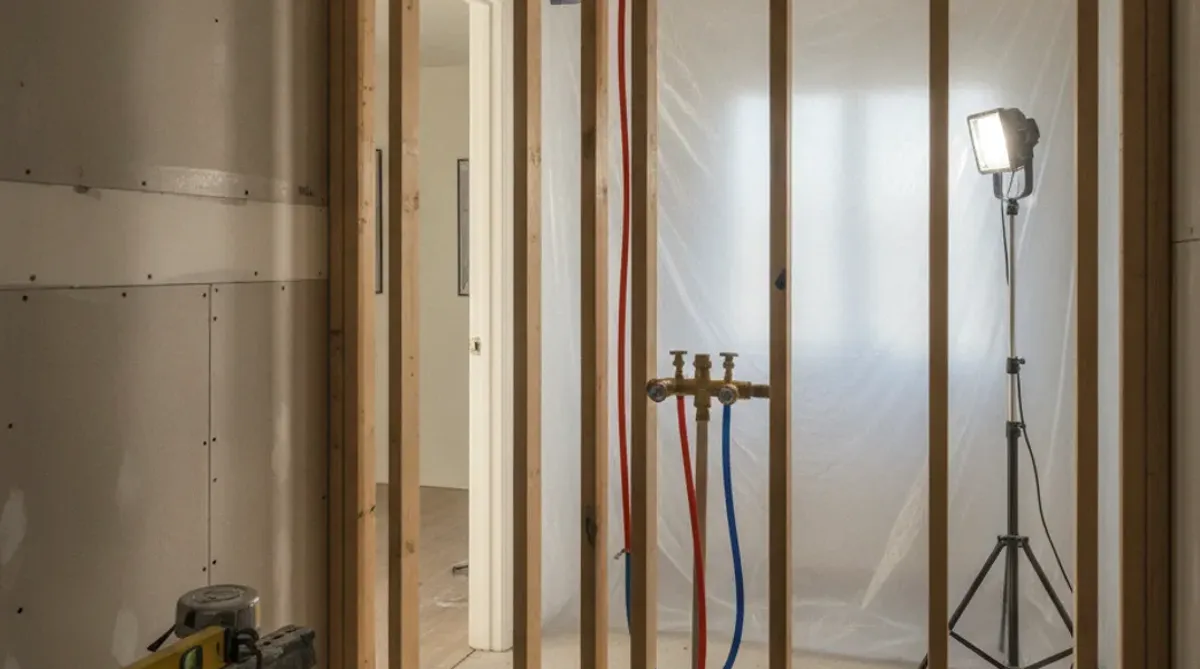
Managing a full remodel with one bathroom starts before demolition. Decide which fixture access matters most, identify a realistic backup, and put every access agreement in writing. A contractor can’t guarantee that the room will remain usable throughout a major project.
For a shower remodel in San Diego, the key question isn’t simply when work begins. You need to know what remains available at each stage. That answer depends on the chosen scope and the independent pro’s written plan.
Decide which fixtures must stay available
Start by separating toilet, sink, and bathing access. They solve different household needs. Don’t treat “the bathroom” as a single on-or-off space.
List every person who depends on the room. Include children, older adults, overnight workers, and anyone with limited mobility. Then rank each person’s nonnegotiable needs. Someone may need reliable nighttime toilet access. Another person may need an accessible bathing arrangement.
Ask the remodeler whether any fixture can safely remain connected during part of the work. This is a planning question, not something to assume. The answer may change after demolition exposes the working area.
Discuss these points before signing:
- Which fixture, if any, may remain available during each phase?
- When must the toilet, sink, tub, or shower be disconnected?
- Can household members enter the room outside working periods?
- Who decides when the room is safe to enter?
- What happens if continued access becomes impractical?
- How will a change in access be communicated?
Create an outside backup for every essential function. That might mean arranging bathroom access with nearby family or choosing another place to stay. Confirm permission, hours, keys, transportation, and nighttime access beforehand. A casual offer from a neighbor isn’t the same as a dependable plan.
Move toiletries, medications, towels, and grooming items before work starts. Store them outside the construction route. A small personal caddy keeps necessities together without turning another room into a second bathroom.
A full bathroom remodel can affect every fixture in a compact room. If continued access is essential, tell the independent pro during scope planning. Don’t wait until the existing fixtures have been removed.
Sequence demolition, plumbing, and finish work
Demolition, plumbing, surface preparation, fixture installation, and finish work need a defined order. In a one-bathroom home, that order also shapes daily living arrangements. Ask for access milestones alongside the work sequence.
The written sequence should identify when each fixture leaves service. It should also state when the pro expects to evaluate reconnection. That isn’t a guaranteed completion date. It’s a shared planning reference that can be updated if the scope changes.
Ask whether selected fixtures and finish materials must be available before demolition begins. If the pro relies on a specific product before moving forward, that dependency belongs in the plan. The written scope should also explain how unavailable or damaged materials affect access decisions.
A focused tub-to-shower conversion may involve less of the room than a full remodel. It still doesn’t guarantee an operating toilet, sink, or shower throughout the project. The pro must evaluate the layout and working space.
For broader shower remodeling in San Diego, ask the pro to mark these milestones:
- The last point when each existing fixture may be used.
- The work that requires the room to remain closed.
- The decision point for reconnecting each fixture.
- Any finish conditions that must be met before use.
- The backup plan if access changes unexpectedly.
Permitting can also affect project planning. Bathroom remodels within the City of San Diego go through Development Services, and permit needs depend on the scope. The specific triggers and fees weren’t confirmed for this article. Ask Development Services and the licensed pro about your exact project.
Homes outside the city need the correct local authority. Unincorporated communities use County Planning & Development Services. Incorporated cities, including Chula Vista, El Cajon, Encinitas, and Oceanside, operate their own building departments. Confirm the jurisdiction before relying on the sequence.
Plan water shutoffs with the household
A vague warning that “the water may be off” isn’t enough. Ask what portion of the home may be affected and how notice will be given. The answer belongs in the written access plan.
Pro Bath SD doesn’t schedule crews or control shutoffs. The licensed independent pro handles that coordination under the project agreement. Your role is to explain the household’s constraints before work begins.
Tell the pro about medical routines, school departures, remote work, caregiving, and unusual work shifts. Don’t assume a typical daytime schedule fits your home. Identify periods when an unexpected loss of bathroom access would cause a serious problem.
Ask the pro to address:
- Who provides notice of a planned shutoff?
- How will the household receive that notice?
- Does the planned shutoff affect only the bathroom?
- Which household activities must stop beforehand?
- Who confirms that normal service has returned?
- What should the household do if the plan changes?
Don’t rely on a verbal estimate of shutoff length. The duration couldn’t be confirmed and will depend on the actual scope. Ask the pro to document the anticipated window, then keep a backup arrangement available.
Plan ordinary chores around the notice you receive. Avoid starting laundry, dishwashing, or bathing when a confirmed shutoff approaches. Keep essential drinking water available according to your household’s normal needs. Don’t improvise plumbing changes or enter the work zone to restore service yourself.
A shared calendar can help everyone follow the same information. Record the planned access changes, the household contact, and the pro’s project contact. Update the calendar when the written plan changes.
If no interruption is acceptable, say that during contractor selection. The pro can explain whether the requested scope fits that constraint. Sometimes the honest answer is that the household needs another place to stay while key fixtures are unavailable.
Protect the route through an occupied home
The bathroom isn’t the only area affected by access. Workers and materials may need a route between the entrance and the room. In an occupied home, that route should be agreed upon before work starts.
Walk the route with the independent pro. Identify narrow halls, stairs, doorways, and shared rooms. Remove loose belongings, fragile decorations, and personal items. Keep medications, documents, keys, and electronics somewhere outside the path.
Ask what protection the pro plans to place along the route. The written scope should identify who installs it, who maintains it, and when it’s removed. Don’t assume that “site protection” includes every floor, wall, or doorway.
Household boundaries also matter. Decide which rooms are private and where tools or materials may be staged. Discuss parking, entry doors, lock procedures, and access when nobody is home. These agreements reduce confusion without making promises about daily cleanup or work hours.
Children and pets shouldn’t enter the work area. Agree on a physical boundary and decide who maintains it. Household members should follow the pro’s direction about when the bathroom may be entered.
Create a separate household route when possible. Keep frequently used items away from the work path. If the main hallway must serve both purposes, ask how movement will be coordinated.
San Diego County homes sit under different permitting authorities, but occupied-home access remains a contract issue between the homeowner and pro. A City of San Diego permit office doesn’t set your household’s hallway rules. Put those expectations into the project documents.
Don’t promise neighbors a fixed end date or unrestricted driveway access. Instead, share the information confirmed by the pro. If parking or shared access affects another resident, address it before materials arrive.
Put access expectations into the written scope
The written scope should describe more than the finished bathroom. For a one-bathroom home remodel, it should also explain how fixture access, shutoffs, entry, and changes will be handled.
Avoid phrases such as “toilet available when possible.” Ask for identifiable stages and responsibilities. If something can’t be guaranteed, the contract should say that plainly and explain how the decision will be communicated.
Include these topics in the contract discussion:
- Which fixtures may remain connected during each stage
- Who decides when a fixture can be used
- How planned shutoffs are communicated
- Whether household entry into the room is allowed
- What route workers and materials will use
- Where tools and materials may be placed
- How concealed conditions are documented
- Who approves scope changes
- How access changes are recorded
- What happens when the backup plan becomes necessary
Review the change-order process carefully. A newly exposed condition may affect both the work and bathroom access. The agreement should identify who can approve a change and how that approval is documented. Don’t authorize unclear work through an informal hallway conversation.
Verify the contractor’s license through the official CSLB license check. California’s home improvement downpayment cap is $1,000 or 10 percent of the contract amount, whichever is less. Keep “whichever is less” in mind when reviewing the payment terms.
Pro Bath SD matches homeowners with licensed, independent local pros. We don’t perform the remodel, provide temporary fixtures, schedule workers, or issue the contractor’s warranty. Ask the matched pro to put warranty terms and access commitments in their own documents.
Read the complete agreement before demolition. If the plan doesn’t explain how your household will function without a fixture, it isn’t ready for a one-bathroom home.
When to call us
Call when a full remodel or tub-to-shower conversion needs a licensed bathroom remodeling pro and a clear occupied-home plan. Call us at (858) 400-6619 and we’ll connect you with a licensed local bathroom remodeler.