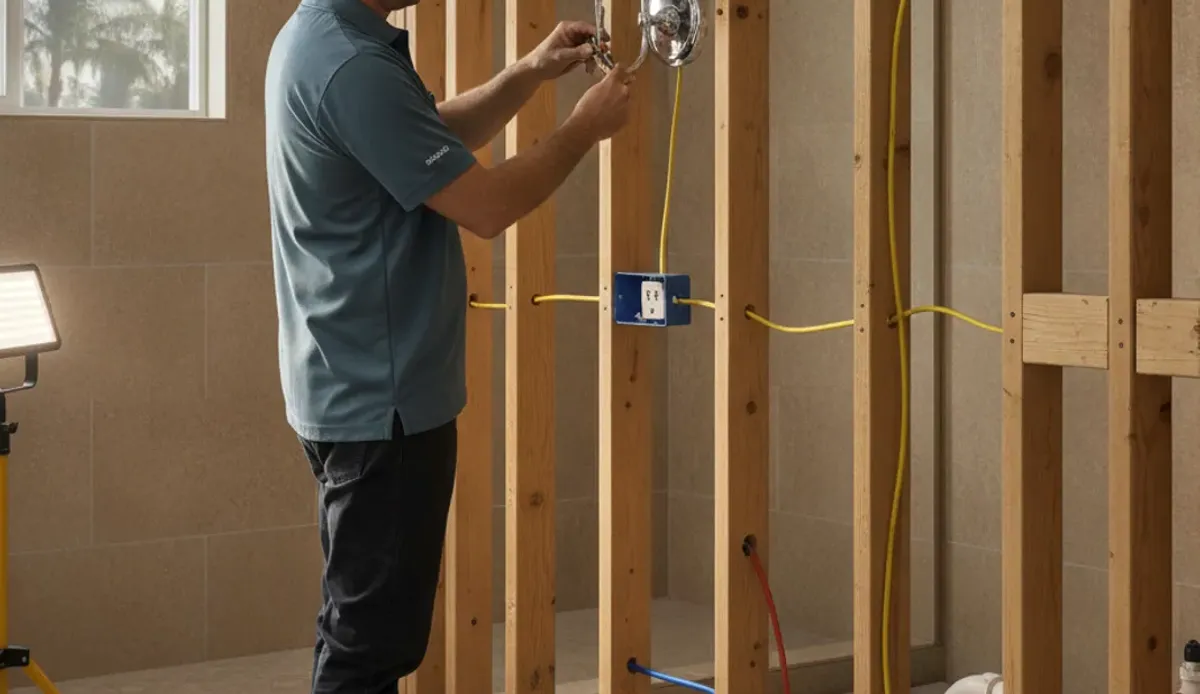
The best time to replace a bathroom exhaust fan during a remodel is before the ceiling closes. The old fan, housing, duct, wiring, and exterior termination can then be inspected together. Keeping the fan may still make sense, but age alone shouldn’t decide it.
A San Diego shower remodel often changes the ceiling finish, lighting plan, or room layout. That creates a practical chance to review the ventilation setup without reopening finished surfaces later.
Signs the existing fan should not go back
Start with what you can observe before demolition. Note whether the fan starts reliably, makes new sounds, shakes, or stops during use. Look for a loose grille, visible corrosion, staining, damaged parts, or a housing that no longer sits firmly.
These signs don’t identify the cause by themselves. A noisy fan may have a motor problem, a mounting problem, or another issue. Weak performance may involve the fan, the duct path, the exterior termination, or several parts together. Ask the licensed pro to inspect the complete setup before recommending replacement.
Also consider whether anyone avoids using the fan. A unit that remains switched off because it’s disruptive isn’t helping the room during showers. Tell the remodeler how the fan behaves during normal use, not only whether the switch works.
Don’t rely on a claimed average lifespan. We couldn’t confirm a primary-source lifespan figure for bathroom exhaust fans. The manufacturer’s model information may offer guidance, but the unit’s present condition matters more during demolition.
The same caution applies when replacing an old bathroom vent fan with a newer model. Fans aren’t interchangeable by default. Housing dimensions, mounting details, controls, electrical connections, and duct connections can differ. The licensed pro should identify the existing model and inspect the opening before you order anything.
If only the visible cover looks dated, don’t assume the entire assembly must change. Some manufacturers may offer model-specific parts. Confirm compatibility directly with the manufacturer, then have the pro decide whether the existing housing remains suitable.
Why duct routing matters as much as the fan
A bathroom fan replacement remodel shouldn’t focus only on the visible grille. The fan connects to a duct hidden above the ceiling or inside another enclosed area. That concealed route needs its own inspection.
Ask the remodeler to trace the bathroom exhaust duct as far as access allows. The pro should identify where it ends, how it connects to the fan, and whether visible sections show damage, disconnection, crushing, sagging, staining, or deterioration. Those observations can change the scope of the project.
Don’t order a fan based only on the old grille size. The new unit must be considered with the available ceiling space, mounting location, duct connection, and manufacturer instructions. A model that fits the visible opening may still conflict with framing or the existing connection above it.
This inspection matters across San Diego County. A condo in City Heights, a detached home in Chula Vista, and a house near Ramona can present different access conditions. Those conditions must be observed at the property. They shouldn’t be guessed from the ZIP code or neighborhood.
We also couldn’t confirm a universal duct size, maximum route, or fitting rule from the approved sources for this page. Have the licensed pro check the installation and the selected manufacturer’s instructions. The pro should also confirm current requirements with the authority responsible for your address.
If the duct needs work, coordinate it with the wider full bathroom remodel. Duct access may affect the ceiling plan, drywall schedule, and exterior work. Resolving that scope before finishes go up reduces the chance of cutting into new surfaces.
What changes when the ceiling is already open
An open ceiling makes hidden conditions visible. The remodeler can see the housing, nearby framing, accessible wiring, and at least part of the duct connection. That information supports a better keep-or-replace decision.
It can also reveal that the original plan needs adjustment. The fan housing may not match the opening expected for a selected replacement. The accessible duct may be damaged or routed differently than drawings suggested. Wiring and controls may need review by the appropriate licensed pro.
This doesn’t mean every open ceiling needs a new fan. A working unit may remain appropriate after inspection. The point is to decide while access is available, not after the ceiling has been patched, textured, and painted.
Before closing the ceiling, ask the remodeler to document what was inspected. Photos of the housing label, mounting area, duct connection, and visible route can help with product selection and later service. Keep the model information with your remodel records.
If the remodel includes new lighting, controls, or other powered features, treat the fan as part of the bathroom electrical and lighting plan. Pro Bath SD doesn’t perform electrical work. We connect homeowners with licensed, independent local pros who can coordinate the fan with the rest of the remodel.
Don’t assume that open access removes permit or inspection questions. Whether a specific City of San Diego bathroom project needs a permit depends on its scope. The approved sources don’t provide a verified trigger checklist for this page. Homeowners within the city can confirm current requirements with San Diego Development Services before work begins.
Coordinating electrical, drywall, and roof or wall work
A fan replacement can involve more than one work area. The housing sits at the ceiling, the electrical connection serves the unit, the duct follows a concealed route, and the termination may meet a wall or roof. Each affected surface needs an assigned person and a place in the schedule.
Start by having the bathroom remodeler define the full scope. Ask who will disconnect and reconnect the fan, who will alter the ceiling opening, who will handle duct work, and who will repair the drywall. If exterior work is needed, confirm who is responsible for that portion before demolition advances.
The brand doesn’t perform these tasks. The licensed independent pros we connect homeowners with determine the proper trade coordination for each property.
Product ordering should follow the site inspection. Give the pro the manufacturer’s complete specifications, not only a product photo or retail listing. Confirm the model, housing dimensions, mounting method, duct connection, controls, and included components against the conditions at the property.
Permit jurisdiction also depends on the address. City of San Diego projects go through Development Services when a permit applies. County Planning & Development Services handles building permits in unincorporated areas such as Ramona, Valley Center, Fallbrook, Alpine, Lakeside, and Spring Valley. Incorporated cities, including Chula Vista, Oceanside, Encinitas, El Cajon, and La Mesa, operate their own building departments.
We couldn’t confirm specific fan-related permit triggers, fees, submittal requirements, or processing times. Ask the authority for your address about the current rules for the proposed scope. Don’t rely on a checklist written for another San Diego County jurisdiction.
Questions for the licensed pro before ordering a fan
Bring a short list to the preconstruction meeting. The answers should reflect your bathroom, the exposed conditions, and the exact product under consideration.
Ask the pro:
- Is the existing fan operating as intended?
- Can the existing housing remain, or does it need replacement?
- What manufacturer and model are installed now?
- Does the visible duct show damage or a poor connection?
- Where does the duct terminate?
- Can the full route be inspected from available access points?
- Will the new housing fit the opening and nearby framing?
- Does the proposed model match the existing duct connection?
- Will the controls or electrical connection need changes?
- Who will handle drywall and paint repairs?
- Could the work affect an exterior wall or roof surface?
- Which local authority should confirm permit requirements?
- What manufacturer instructions need to remain with the project records?
Ask for these decisions before purchasing the fan. Retail return policies don’t resolve a product that conflicts with the framing, duct, controls, or planned ceiling finish.
You should also verify the contractor’s license through the official California Contractors State License Board lookup. Search the person or business that will contract for the work, then compare the result with the information provided to you.
We couldn’t confirm a reliable average price for changing a bathroom exhaust fan. The cost depends on the observed scope, and the approved claims ledger contains no verified market figure. Request a written proposal after inspection. It should make clear whether the work covers only the fan or also involves the housing, duct, electrical connection, ceiling repair, or exterior surfaces.
When to call us
Call when an old fan, hidden duct, electrical changes, or open ceiling needs coordinated review during a San Diego bathroom remodel. Call us at (858) 400-6619 and we’ll connect you with a licensed local bathroom remodeler.